



DAP 18-46-0 Fertilizer Wholesale | Premium Diammonium Phosphate Supplier/High Phosphorus Crop Booster

Request a Quote
Buy premium DAP 18-46-0 Diammonium Phosphate fertilizer in bulk. High phosphorus fertilizer ideal for root development, crop establishment, cereals, oilseeds, vegetables, and commercial agriculture. Worldwide wholesale and export supply available.
Wholesale DAP 18-46-0 diammonium phosphate fertilizer – high phosphorus crop booster. Granular, agricultural grade. Bulk 50kg bags & metric tons. Best pricing for farmers, co-ops & crop suppliers. Promotes strong roots, flowering & fruiting. Fast shipping. Get a quote.
DAP – Diammonium Phosphate Fertilizer (NPK 18‑46‑0) – High‑Concentration Phosphorus & Nitrogen Fertilizer for Maximum Crop Yield & Root Development
- Premium DAP 18-46-0 Fertilizer for Sale | Diammonium Phosphate Wholesale
- High Phosphorus DAP Fertilizer Bulk Supply | Agricultural Fertilizer Exporter
- DAP 18-46-0 Fertilizer Wholesale | Premium Crop Establishment & Root Development Formula
- Diammonium Phosphate Fertilizer Supplier | DAP 18-46-0 Agricultural Grade
Boost your crop yields with DAP (Diammonium Phosphate) 18‑46‑0 – the world‘s most concentrated phosphate-based fertilizer for superior plant nutrition. Our high-grade granular DAP delivers 18% nitrogen (N) and 46% phosphorus (P₂O₅) , providing a powerful starter dose of nitrogen and complete phosphorus nutrition for optimal root development, vigorous plant growth, flowering, and grain filling. It is highly water‑soluble and dissolves quickly to release plant‑available phosphate and ammonium [0†L7-L10][8†L5-L9]. Suitable for all soil types, including acidic soils (temporary alkalizing effect enhances phosphorus uptake), and ideal for a wide range of crops: wheat, corn, rice, barley, soybeans, canola, sunflower, potatoes, sugar beets, vegetables, fruit trees, and turfgrass [8†L13-L18][10†L12-L14]. Available in convenient packaging – 50kg PP/PE woven bags, jumbo bags (500 kg, 1,000 kg), bulk supply (flexitanks, bulk vessels) and export‑ready containers. Backed by ISO, SGS, and other quality certifications. Store in a cool, dry place. Comply with all local regulations for fertilizer handling. Contact us for wholesale orders. Delivery by air, land & sea worldwide. Standard & express shipment available.
Product Description
The World‘s Most Concentrated Phosphate‑Based Fertilizer
DAP (Diammonium Phosphate) 18‑46‑0 is a premium, high‑analysis granular fertilizer, widely recognized as the most concentrated phosphate‑based fertilizer available [8†L5-L6]. It provides a balanced supply of two essential primary macronutrients: 18% nitrogen (N) and 46% phosphorus (P₂O₅) , delivering a total nutrient content of 64% – one of the highest of any granular fertilizer. Its NPK grade of 18‑46‑0 makes it the preferred choice for farmers seeking to maximize both root development and early‑season vigour.
DAP is highly water‑soluble, dissolving quickly in the soil to release plant‑available phosphate and ammonium immediately after application [0†L8-L10]. This ensures that crops have instant access to the nutrients they need at critical growth stages, from planting and germination through flowering and grain fill.
Core Nutrient Functions
| Nutrient | Percentage | Key Agronomic Role |
|---|---|---|
| Nitrogen (N) | 18% | Promotes vigorous vegetative growth, protein synthesis, and deep green colour. Provides an excellent starter N source for rapid early development. |
| Phosphorus (P₂O₅) | 46% | Essential for root system establishment, flowering, fruit/seed formation, and overall plant energy transfer (ATP). Promotes early crop ripening and increased grain or fruit yield. |
| Sulphur (S) | Low (trace) | Contributes to better intake of nitrogen and phosphorus by plants. |
Why Choose DAP 18‑46‑0 for Your Crops?
-
Superior Root Development: High phosphorus content encourages the establishment of a strong, extensive root system, improving water and nutrient uptake, and enhancing drought tolerance.
-
Accelerated Early Growth: The combination of ammonium nitrogen and available phosphorus gives crops a powerful, rapid “starter” boost immediately after germination.
-
Enhanced Crop Quality & Yield: Phosphorus plays a vital role in grain filling, fruit and flower development, and oil content in oilseed crops (canola, sunflower). DAP delivers the P that translates directly into higher yields and better‑quality produce.
-
Highly Soluble & Readily Available: DAP is water‑soluble and dissolves quickly upon contact with soil moisture, ensuring the nutrients are immediately available to the plant for uptake [9†L28-L31].
-
Temporary Alkalizing Effect for Acid Soils: Dissolving DAP creates an alkaline pH zone (pH 6.0‑8.0) around each granule [8†L9-L11][9†L27-L28]. This temporary pH rise helps unlock and stimulate better uptake of phosphorus from the fertilizer on acid soils, and can also aid in the availability of certain micronutrients. This property makes DAP particularly valuable on acidic or depleted soils where phosphorus availability is typically limited.
-
Versatile Across Crops & Soil Types: Suitable for a broad range of soils (neutral, acid, and alkaline) [9†L30-L31], and effective for virtually all field crops, horticultural crops, vegetables, fruit trees, and turfgrass [8†L17-L19][14†L14-L23].
-
High Nutrient Density (64%): Reduces handling, storage, and transport costs per kilogram of delivered nutrients, improving operational efficiency.
Ideal Crops for DAP 18‑46‑0
| Crop Type | Specific Crops | Agronomic Benefit |
|---|---|---|
| Cereals | Wheat, Corn (Maize), Rice, Barley, Oats, Rye | Boosts tillering, grain filling, and protein content [8†L17-L19][10†L12-L14] |
| Oilseeds | Canola, Rapeseed, Sunflower, Soybeans | Improves seed oil content, pod set, and overall yield [8†L19] |
| Root & Tuber Crops | Potatoes, Sugar Beets, Carrots | Supports healthy tuber and root development, increases sugar content [8†L18] |
| Legumes | Soybeans, Peas, Beans, Peanuts | Enhances nitrogen fixation, pod formation, and overall plant vigour |
| Fruit Trees | Mango, Citrus, Apple, Banana, Palm, Cacao | Promotes flowering, fruit set, fruit size, and quality [14†L19-L23][10†L12-L14] |
| Vegetables | Broccoli, Cauliflower, Lettuce, Tomato, Pepper, Onions | Drives early growth, head formation, and overall plant health [10†L13-L14] |
| Horticultural & Speciality Crops | Roses, Flowers, Turf, Sugarcane, Tea, Coffee, Rubber | Enhances bloom size, colour, plant vigour, and disease resistance [10†L14][14†L19-L20][14†L28-L29][14†L32-L33] |
| Forage & Pasture | Alfalfa, Clover, Perennial Grasses | Increases biomass, protein content, and stand persistence [8†L18] |
⚙️ Product Specifications – Diammonium Phosphate (DAP 18‑46‑0)
Typical Values for High‑Quality Agricultural Grade Granular DAP
| Parameter | Specification |
|---|---|
| Nutrient Grade | 18‑46‑0 (N‑P₂O₅‑K₂O) |
| Total Nutrients | 64% minimum |
| Total Nitrogen (N) | 18% min (typically 18‑18.5%) |
| Total Phosphate (P₂O₅) | 46% min (typically 46‑46.5%) [7†L17] |
| Water‑Soluble P₂O₅ | 41% min (approx. 90% of total P₂O₅) [7†L17][7†L24-L25] |
| Moisture | ≤ 2.0% [7†L18] |
| Particle Size | 90% min between 1‑4mm [7†L18] |
| Particle Size (Narrower) | 2‑4mm (≥90%) |
| pH (1% Water Solution) | 6.0 – 8.0 (typically 7.5‑8.0, varies by source) [15†L15-L16][8†L16-L17][9†L27-L28] |
| Bulk Density | 0.90 – 1.02 kg/L [9†L26-L27] |
| Water Solubility (20°C) | 588 g/L [9†L27-L28] |
| Granule Strength | ≥ 6 MPa [8†L17] |
| Colour | Variable shades of brown, tan, light brown, dark brown [0†L22][9†L25] |
| Appearance | Granular, free‑flowing, low dust [9†L25] |
| Chemical Formula | (NH₄)₂·HPO₄ |
| CAS Number | 7783‑28‑0 |
All specifications are typical for high‑quality agricultural grade DAP. Values are based on the dry, anhydrous product. Colour may vary by manufacturing source.
Important Quality Notes:
-
Contains no heavy metals (tested and certified) [0†L48-L50].
-
The ammonium‑N component is gradually converted to nitrate by soil bacteria, resulting in a subsequent drop in pH, but the initial pH rise around the granule is a temporary effect [6†L28-L32].
🌱 Recommended Application Rates for Key Crops
General application rates vary depending on soil condition, structure, humus content, pH level, and the presence of useful elements. Soil testing is strongly recommended before fertilising. For best results, use in conjunction with a proven nutrient management plan and follow the advice of a qualified agronomist. Place fertilizer at least 5‑8 cm away from the seed row.
📋 Row Crops & Cereals
| Crop | Application Rate (kg/ha) | Application Timing & Details |
|---|---|---|
| Wheat | 40‑100 kg/ha | Base or starter fertiliser at planting; split application may be used in high‑yield systems |
| Corn (Maize) | 50‑80 kg/ha | At planting (starter) or before sowing to support early root development [10†L13] |
| Rice | 50‑100 kg/ha | Applied before planting or at early tillering stage [10†L12][14†L15-L16] |
| Barley | 40‑80 kg/ha | At or before planting to enhance tillering and grain fill |
| Canola / Rapeseed | 50‑100 kg/ha | Broadcast pre‑sowing or as starter fertiliser to boost early vigour and oil content |
| Soybeans | 30‑60 kg/ha | Apply at or before planting to support nodulation and early growth |
| Sunflower | 30‑50 kg/ha | Apply in the seedbed or at planting for robust root and head development |
🥔 Root Crops
| Crop | Application Rate (kg/ha) | Application Timing & Details |
|---|---|---|
| Potatoes | 300‑500 kg/ha | Apply before planting or in the planting furrow (avoid direct seed contact) [10†L14] |
| Sugar Beets | 200‑300 kg/ha | Broadcast and incorporate pre‑sowing to support root development |
🍎 Fruit Trees & Orchards
| Tree Crop | Rate (g/tree) | Frequency & Timing |
|---|---|---|
| Mango, Citrus, Longan, Grapefruit, Rambutan (business phase) | 300‑500 g/tree | 3‑4 times/year: after harvest / before flowering / after fruit set / fruit development [14†L21-L23] |
| Banana / Palm / Cacao | 80‑120 kg/ha | Base fertiliser or 7‑10 days after planting [10†L12-L14] |
| Coffee / Pepper (business phase – dry season) | 100‑150 kg/ha | 1 time [14†L28-L29] |
| Coffee / Pepper (business phase – rainy season) | 150‑180 kg/ha | 1‑2 times: early rainy season / mid‑rainy season [14†L29-L30] |
🥦 Vegetables
| Crop | Rate (kg/ha) | Timing |
|---|---|---|
| Broccoli / Cauliflower | 100‑125 kg/ha | Before planting or side‑dress after head formation [10†L14] |
| Tomato / Pepper / Chili | 80‑120 kg/ha | Base fertiliser or 7‑10 days after planting [14†L23-L24] |
| Watermelon / Cucurbits | 80‑120 kg/ha | At planting and again during fruit development [14†L23-L25] |
| Leafy Vegetables (lettuce, cabbage, spinach) | 80‑100 kg/ha | Base fertiliser or 7‑10 days after planting [14†L26-L27] |
🌹 Horticultural & Speciality Crops
| Crop | Rate (kg/ha) | Timing & Details |
|---|---|---|
| Roses | 150‑200 kg/ha | Before planting and after each bloom cycle [10†L14] |
| Sugarcane | 100‑150 kg/ha | Basal or split application (early growth / after planting) [14†L18-L19] |
| Tea | 50‑100 kg/ha | 6‑7 times/year according to harvest cycle [14†L32-L33] |
| Rubber (business stage) | 70‑100 kg/ha | 2 times/year (early rainy season / late rainy season) [14†L33-L34] |
| Turf / Lawns | 50‑100 kg/ha | Spring and autumn applications |
🔧 Application Methods & Best Practices
-
Broadcast / Top‑dressing: Spread evenly over the soil surface, then incorporate into the top 5‑10 cm of soil to reduce nitrogen volatilisation.
-
Band / Side‑dressing: Place in a band 5‑8 cm beside and below the seed row. Avoid direct seed contact to prevent germination damage from ammonia [6†L22-L27][3†L34-L35].
-
Fertigation (Limited): DAP is water‑soluble and can be used in fertigation, but filtration may be required to prevent clogging due to small amounts of insoluble material.
-
Pre‑plant (Basal): Broadcast evenly and incorporate into the soil before planting.
-
Top‑dress (Side‑dress) for Established Crops: Apply alongside rows after emergence for cereals, corn, and other row crops.
⚠️ Important Application Precautions:
-
Placement matters – avoid direct seed contact. To prevent the possibility of seedling damage, care should be taken to avoid placing high concentrations of DAP near germinating seeds. The ammonium released from dissolving DAP granules can be harmful to seedlings and plant roots in immediate proximity [6†L22-L28]. Always maintain a small layer of soil between the seed and the fertilizer band (keep a gap of at least 5‑8 cm).
-
Incorporate after application. After broadcast application, incorporate DAP into the soil to minimise nitrogen loss through ammonia volatilisation and to ensure even distribution.
-
For best results, have your soil tested annually by a qualified laboratory. Base application rates on soil analysis, crop type, and target yield.
-
Use on acidic soils: On acid soils, the temporary alkalizing effect of DAP around the granule helps stimulate better uptake of phosphorus [8†L9-L11].
-
This product should be used as part of an integrated crop management plan and can be co‑applied with other fertilizer products.
📦 Available Packaging Options & Sizes
We offer a full range of packaging to meet your needs, from small farm bags to large‑scale bulk shipping.
| Format | Net Weight | Container Type | Best For |
|---|---|---|---|
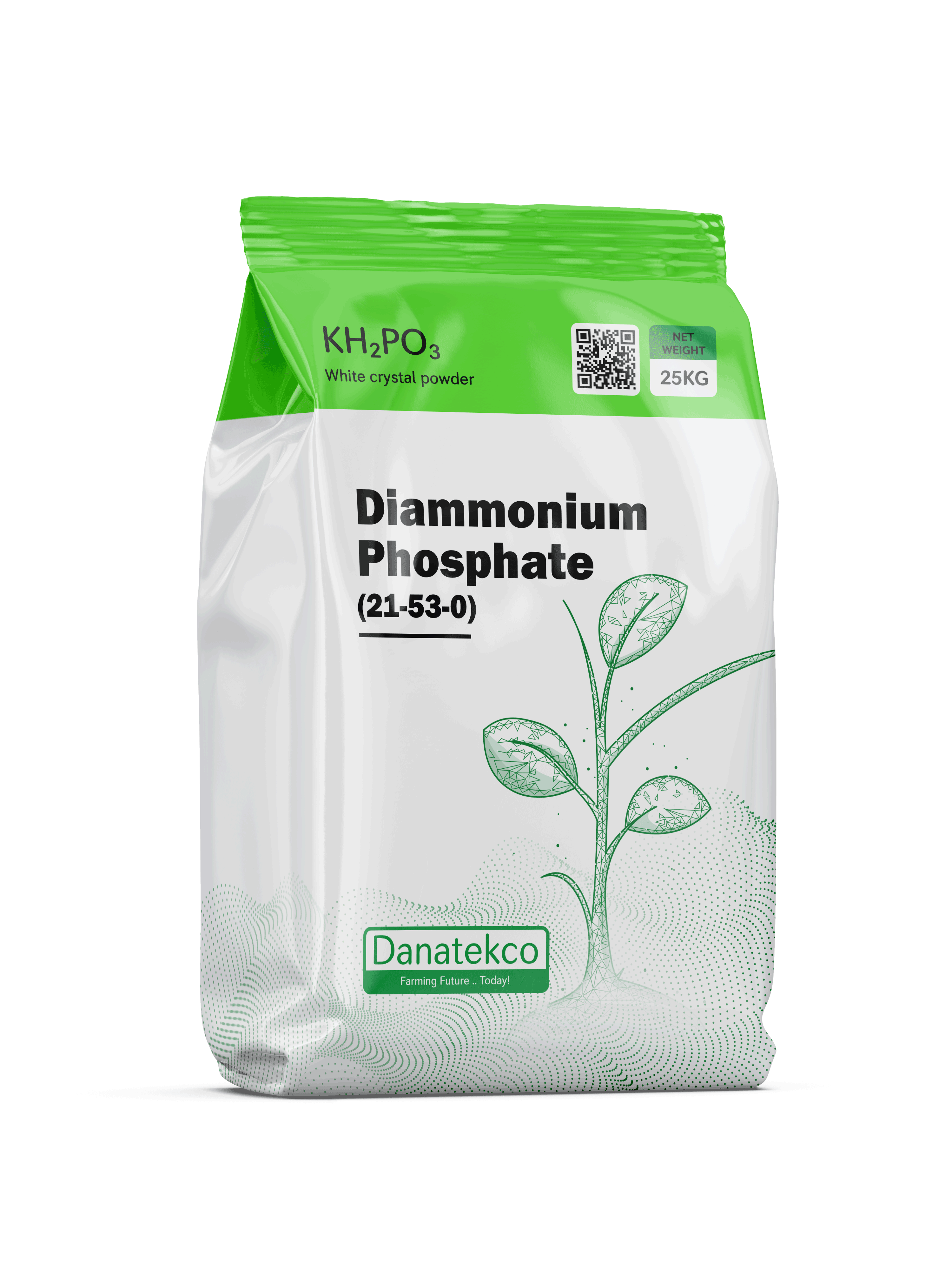
| 25kg PP/PE Woven Bag | 25 kg | Polypropylene woven bag with polyethylene inner liner | Small farms, garden centers, retail distribution, sample applications [2†L14][12†L13] |
| 50kg PP/PE Woven Bag | 50 kg | Polypropylene woven bag with polyethylene inner liner | Standard farm distribution, agricultural cooperatives [7†L18][9†L25][14†L14] |
| 500kg Jumbo Bag | 500 kg | FIBC jumbo bag (PP woven) | Medium‑scale farm use, convenient bulk handling |
| 1,000kg Jumbo Bag | 1,000 kg (1 MT) | FIBC jumbo bag (PP woven) | Bulk farm delivery, cost‑effective handling [2†L10][12†L13] |
| Bulk / Loose | Custom (per ton) | Pneumatic trailer / bulk vessel / bulk ship | Large‑scale growers, cooperatives, importers [9†L25][15†L19-L20] |
| Palletized Load | 1.5 – 2.0 MT (50kg bags) | Shrink‑wrapped pallet | Warehouse distribution, retail chains |
| 20ft / 40ft Container Loads (FCL) | 20‑25 MT (flexible) | Intermodal container | Export, large‑scale distribution [7†L5][15†L21-L22] |
*Full containers can be packed with mixed SKUs (jumbo bags + 50kg bags). Palletisation and shrink‑wrapping available. Custom bag printing (OEM) is available for wholesale clients (MOQ applies).*
Wholesale Quantities
We supply DAP 18‑46‑0 fertilizer in large volumes to agricultural cooperatives, distributors, and large‑scale farming operations:
-
Wholesale Cases: 4‑pack, 6‑pack, 12‑pack of 50kg bags
-
Full Pallets: Mixed packaging formats or single SKU
-
20 ft / 40 ft Container Loads (FCL): For export and large‑scale distribution
-
Bulk Vessel: For ultra‑large‑scale buyers
Contact us for custom quotes, mixed pallets, and export pricing. Large‑volume orders are available for prompt shipment.
🧴 Storage & Shelf Life
| Condition | Duration | Instructions |
|---|---|---|
| Unopened | 36 months (3 years) from manufacture date | Store in a cool, dry, well‑ventilated area, away from direct sunlight and heat sources [3†L6][14†L14-L15] |
| Once Opened / Partially Used | Use within 6‑12 months | Reseal bags tightly to prevent moisture absorption and caking |
| Bulk Storage | Up to 12 months | Store in clean, dry, climate‑controlled bins. Protect from rain and insolation |
| Temperature Range | −20 °C to +30 °C | Store within this range [15†L17-L18] |
| Maximum Humidity | ≤ 60% | Avoid high humidity [15†L17-L18] |
| Shelf Life in Bags | 36 months | When stored in unopened, original packaging in dry conditions [14†L14-L15] |
🚜 Best Management Practices for DAP Storage
-
Location: Store in a cool, dry, clean, well‑ventilated, roofed area with a moisture‑proof foundation. Keep bags off the floor (use wooden pallets or other raised surfaces). Keep away from clothing, chemicals and combustible materials.
-
Prevent Moisture: DAP is hygroscopic (tends to take up moisture from the air) and will cake (clump) if exposed to high humidity [3†L24-L25]. A dedicated storage shed or warehouse is ideal for bulk storage [3†L25-L26].
-
Bulk Storage: Storage in a bulk shed is the preferred method. Covering with a tarp may reduce any moist air uptake [3†L25-L26].
-
Avoid Contamination: Do not store in direct contact with alkalis, acids, or flammable substances [15†L18-L19]. Urea should not be mixed with other types of fertilizers when storing in bulk [15†L19-L20].
-
Security: Keep out of reach of children (P102) [3†L40-L42]. Ensure correct signage and restrict access.
-
Handling: Avoid use of augers as they may damage the fertilizer and increase handling problems [3†L26-L27].
-
Do not stack more than 10 layers high [3†L15-L16].
-
Do not smoke or use fire in the storage area [3†L30-L31].
Shelf Life: DAP has a shelf life of up to three years when stored in its original unopened packaging under appropriate conditions [3†L6][14†L14-L15].
📜 HS Code & Tariff Classification
For accurate customs documentation and tariff calculation, we provide the correct Harmonized System codes.
| Code | Description |
|---|---|
| HS Code 3105.30 | Fertilisers – Mineral or chemical fertilisers containing two or three of the fertilising elements nitrogen, phosphorus and potassium; diammonium hydrogenorthophosphate (diammonium phosphate) [4†L5-L8][4†L20-L23] |
| US HTS Tariff Code | 3105.30.00.00 – DAP (Diammonium phosphate) for US imports [4†L25-L26] |
| Schedule B Code (US) | 3105.30.00.00 – US export classification for DAP [4†L44-L45] |
| EU Combined Nomenclature | 3105 30 00 – Diammonium hydrogenorthophosphate (excl. that in tablets or similar forms) [4†L34-L36] |
| China HS Code | 3105300090 – DAP 18‑46‑0 exports from China [7†L15] |
Chapter / Heading Breakdown:
-
Chapter 31: Fertilizers
-
Heading 3105: Mineral or chemical fertilisers containing two or three of the fertilising elements nitrogen, phosphorus and potassium; other fertilisers
-
Subheading 310530: Diammonium hydrogenorthophosphate (diammonium phosphate)
Export Documents Available:
-
Certificate of Analysis (COA) – per batch (including N%, P₂O₅%, water‑soluble P₂O₅, moisture, particle size)
-
Certificate of Origin – upon request
-
Commercial Invoice and Packing List with HS Code specification
-
Phytosanitary Certificate – upon request
-
Bill of Lading (Sea) / Air Waybill (Air)
-
MSDS / SDS – available
-
ISO 9001, SGS certification documentation – available upon request
-
GMP / Quality assurance documentation – available
All documentation provided as required by destination market regulations.
❓ Frequently Asked Questions (FAQs)
Q: What does 18‑46‑0 mean?
A: DAP 18‑46‑0 contains 18% nitrogen (N) , 46% phosphorus (P₂O₅) , and 0% potassium (K₂O). The total nutrient content is 64% [7†L23-L24].
Q: Is DAP a complete fertiliser?
A: No, DAP provides nitrogen (N) and phosphorus (P) only. It does not contain potassium (K₂O). For complete NPK nutrition, DAP should be used alongside a potassium source such as KCl (potash) or SOP, depending on crop needs.
Q: Why is DAP considered a “starter” fertiliser?
A: DAP is highly water‑soluble and contains readily available ammonium‑N and phosphate. This provides young plants with an immediate nutrient boost, promoting rapid early root development and vigorous vegetative growth, especially beneficial when soil phosphorus levels are low.
Q: Can DAP be applied in acidic soils?
A: Yes. DAP is particularly effective in acidic soils. When it dissolves, it creates a temporary alkaline zone (pH 7.5‑8.0) around each granule, which helps “unlock” phosphorus and improves its availability to crops [8†L9-L11][9†L27-L28].
Q: Can DAP be applied in furrow with seeds?
A: Not directly. DAP should be placed a safe distance from seeds (minimum 5‑8 cm away) to avoid germination damage. To prevent seedling damage, keep a small layer of soil between the seed and the fertilizer [6†L22-L28][3†L34-L36].
Q: Is DAP suitable for organic farming?
A: Synthetic DAP is not permitted for use in certified organic farming systems. This product is intended for conventional agriculture.
Q: Is DAP water‑soluble for use in fertigation systems?
A: DAP has good water solubility (up to 588 g/L at 20°C). However, due to small amounts of insoluble material, filtration may be required for some drip irrigation systems.
Q: What is the difference between DAP and MAP?
A: DAP (18‑46‑0) and MAP (11‑52‑0) are both nitrogen‑phosphate fertilisers. DAP has a higher nitrogen content (18% vs 11%) and creates a higher alkaline pH (7.5‑8.0) around the granule compared to MAP (pH 4‑5). DAP may be superior on acid soils, while MAP can be better for neutral or alkaline soils.
Q: How should DAP be stored to prevent caking?
A: Store in a cool, dry, well‑ventilated area, away from direct sunlight. Keep bags tightly sealed and off concrete floors to prevent moisture absorption. The shelf life is typically 36 months when stored correctly [14†L14-L15].
Q: What is the difference between granular DAP and powdered DAP?
A: Granular DAP (1‑4mm) is free‑flowing, easier to spread evenly with broadcast equipment, and has a lower dust content. Powdered DAP is less common, dissolves faster, and is more suitable for liquid mixing but can be dusty and more difficult to spread evenly. Our standard product is granular.
Q: Is DAP hazardous to handle?
A: DAP is generally safe to handle, but dust suppression and use of PPE such as gloves, mask, and goggles are recommended [3†L36-L37][10†L8-L9].
🌍 Global Supply & Delivery Information
We sell only top original quality products at very good and affordable prices. We have warehouses strategically located in the United States, Europe, and the Middle East, ensuring fast and reliable distribution across these regions.
We can ship worldwide via:
-
✈️ Air Freight – Express & rapid delivery (samples and small parcels only)
-
🚚 Land Transportation – Truck delivery within regions (50kg bags, jumbo bags, palletised loads)
-
🚢 Sea Freight – Cost‑effective for bulk orders (containers, break‑bulk, bulk vessels)
Shipping Options Available:
-
Standard International Shipping (LCL / FCL sea freight)
-
Express Worldwide Delivery (air freight)
-
Full Container Load (FCL) Supply (20ft / 40ft containers)
-
Break‑Bulk / Bulk Vessel (project cargo)
We deliver within the United States, Europe, and the Middle East, and we can ship to any destination globally. We support global exports with professional logistics coordination and secure delivery solutions worldwide.
All export shipments include full customs documentation and commodity classification for smooth clearance.
For more inquiries or to place an order (25kg or 50kg bags, jumbo bags, pallets, full containers, or bulk vessel loads), please contact us.
We deliver by air, land, and sea — internationally. Standard and express shipment options available.


Reviews
There are no reviews yet.