Wholesale Guides
Buying Energy Drinks Wholesale: Pallets, Labels and Best-Before Dates
Sep
Energy drinks are one of the easiest lines to sell and one of the easiest to get wrong at the buying stage. Demand is steady, the brands are known, and cans stack well on a pallet. The problems come from what is not on the price list: which market the stock was packed for, how long is left on the best-before date, whether the label meets your country’s caffeine rules, and whether the cans are genuine at all.
This guide is for retailers, convenience chains, gyms, vending operators and distributors buying energy drinks by the pallet or container.
Can sizes and pack formats
The same brand is packed in different sizes for different markets. In Europe the common energy drink cans are 250ml and 500ml. North American stock is usually 355ml (12 fl oz) or 473ml (16 fl oz). Cans are normally sold in trays or shrink-wrapped cases of 12 or 24, and pallet configurations depend on the can size, the case format and the pallet standard (a 120 x 80cm EUR pallet holds less than a 120 x 100cm UK or industrial pallet).
When you ask for a pallet price, also ask for cases per layer, layers per pallet and total cans. Two “pallet” quotes can differ by a large number of cans, which makes the per-pallet price meaningless on its own.
Check which market the stock was packed for
A lot of wholesale energy drink stock is parallel or grey import: genuine product packed for one country and sold in another. That is not automatically a problem, but the label has to be legal where you sell it. Before you buy, confirm:
- The language on the label, and whether you will need to over-sticker it.
- The ingredients and caffeine content for that market version. Recipes, sweeteners and caffeine levels vary between countries even under the same product name.
- The deposit or recycling marking, where your country runs a can deposit scheme.
- Whether sugar taxes apply. In the UK, the Soft Drinks Industry Levy applies to drinks with 5g or more of added sugar per 100ml.
Caffeine labelling rules
In the EU and UK, drinks containing more than 150mg of caffeine per litre must carry the statement “High caffeine content. Not recommended for children or pregnant or breast-feeding women”, followed by the caffeine content in mg per 100ml, in the same field of vision as the product name. The requirement comes from the EU Food Information to Consumers Regulation (1169/2011). Most mainstream energy drinks exceed that threshold, so stock packed for the US or other markets without the warning is not compliant for sale in Europe as it stands.
Some products also have caffeine levels that are unusual in European retail. PRIME Energy is sold in the US in 355ml cans with 200mg of caffeine per can and has been withdrawn from shelves in some markets over its caffeine content and labelling. If you are offered it, confirm exactly which version and label you would receive and whether it can be sold where you are.
Rules on selling energy drinks to children are also tightening. Several countries and many UK retailers already restrict sales to under-16s, and England has consulted on a legal ban. Check the position in your market.
Best-before dates
Canned energy drinks typically carry more than a year of shelf life from production, but wholesale stock is often part-way through that period by the time it reaches you. Ask for the best-before date of the actual lot, not the product’s nominal shelf life. A useful rule is to calculate how many months of sales the order represents and make sure the remaining shelf life is comfortably longer than that. Short-dated stock can be good value for fast sellers and clearance channels, as long as the price reflects it.
Avoiding counterfeit stock
Counterfeit and refilled energy drinks do turn up in wholesale channels, usually priced well below the market. Warning signs include cans without batch codes or with identical codes across a whole pallet, poor print quality, misspellings, seams that look different from genuine cans, and suppliers who will not give a sample or accept payment terms. Our guide on how to find reliable wholesale suppliers covers the checks worth doing before a first order.
Choosing the range
Most retailers sell the bulk of their energy drink volume from a small number of lines. A sensible first order covers the original flavour of each main brand, the sugar-free versions, and one or two popular flavours, then adds more once you have sales data. Sugar-free lines have grown enough that leaving them out usually costs sales.
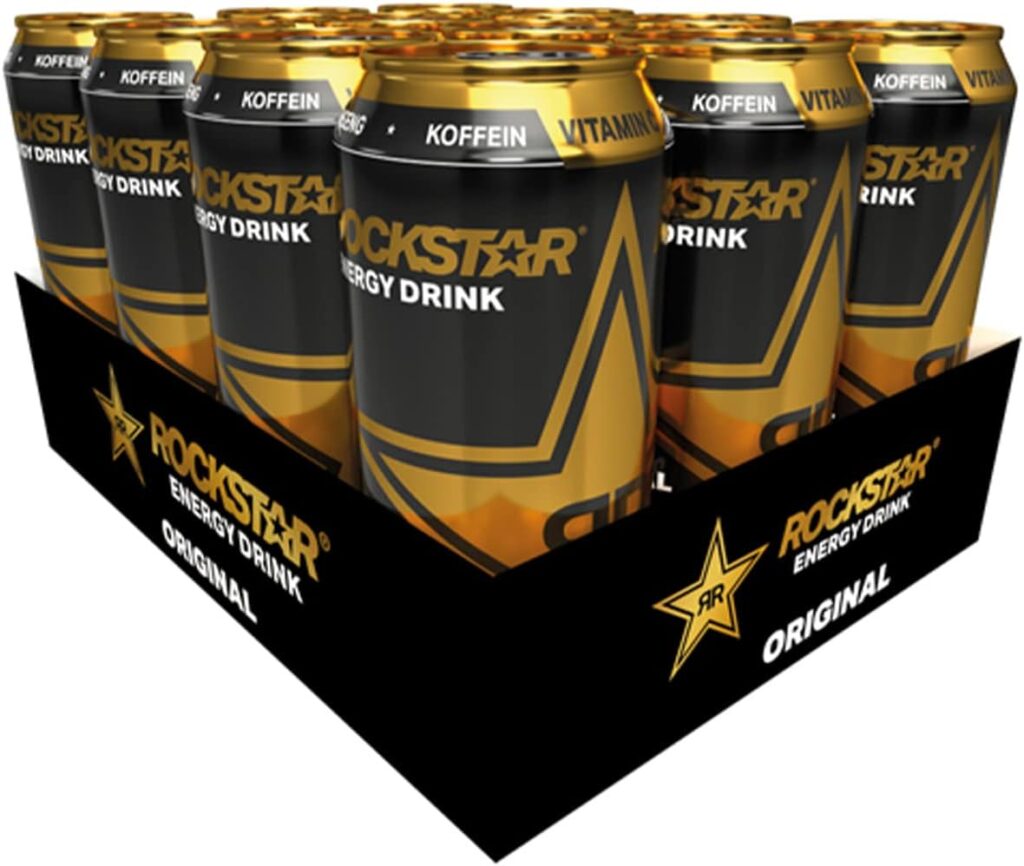
The wholesale energy drinks range includes Monster, Rockstar and PRIME in regular and sugar-free versions, including Rockstar Original and Rockstar Sugar Free. For mixed pallets, soft drinks can usually be combined in the same order.
Frequently asked questions
How many cans are on a pallet of energy drinks?
It depends on the can size, the case format and the pallet type, so ask the supplier for the exact configuration. Always compare quotes by price per can, not price per pallet.
Can I sell US-packed energy drinks in the UK or EU?
Only if the labelling meets local rules, including the high-caffeine warning and caffeine content per 100ml, and the product’s ingredients and caffeine level are permitted. In practice many US-packed cans need relabelling or cannot be sold as they are.
Are mixed pallets possible?
Often, yes, particularly across flavours of the same brand. Mixed pallets may carry a slightly higher price per case than single-line pallets.
Request a quote
Read more about buying energy drinks in bulk, then send us the brands, can sizes, quantities and destination. We will confirm stock, market version and best-before dates before you commit.